

Athan resting in the 2,700 year old olive tree in Aigina Greece
The Olive’s Journey: How Humans Tamed a Wild Olive Tree
Imagine the sun-drenched hills of the Eastern Mediterranean thousands upon thousands of years ago. Among the wild olive trees grew Olea europaea sylvestris – the wild ancestor of the olive tree we know today. For millennia, this wild olive tree and early humans lived side-by-side, setting the stage for one of history’s most fascinating partnerships: the domestication of the olive.
Where Did the Story Begin?
Scientists and archaeologists agree that this transformation story likely started in the Eastern Mediterranean. Think of the mainland of Greece and the Aegean Sea and coastal areas of Syria, Lebanon, Israel, and Palestine (the Levant) – this region is the most probable birthplace of the cultivated olive. Nearby southeastern Turkey and possibly the island of Cyprus were also part of this early zone. The warm, dry summers and mild, wet winters here were perfect for the wild olive. It’s no coincidence that these lands were also cradles of early farming and civilization.
Evidence of the olive’s ancient presence is stunning – in Greece, on the island of Santorini, fossilized olive leaves were found trapped in volcanic rock, dating back an incredible 60,000 years! While the wild tree was widespread, the journey to the cultivated olive we rely on began in these eastern shores.
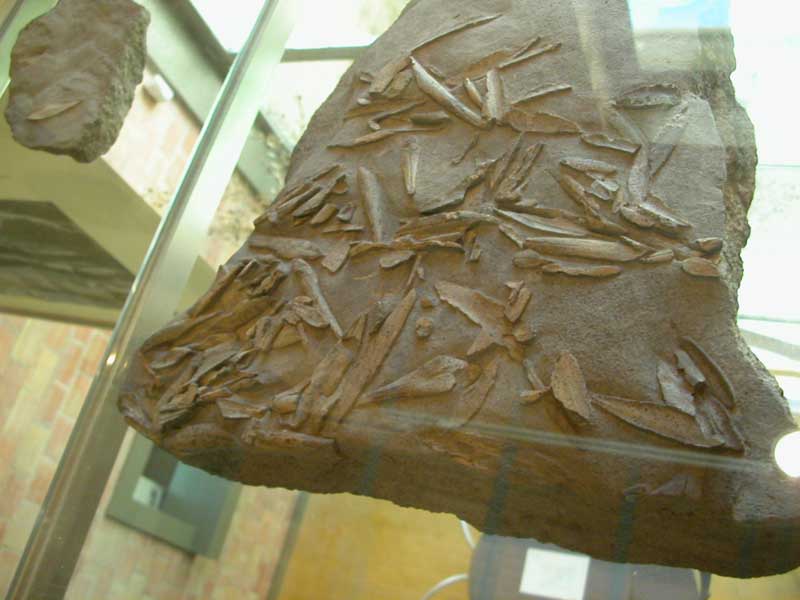
Fossilized Olive Leaf Santorini 60,000 year old. Photo courtesy of Olive Museum in Sparta
From Wild Fruit to Cultivated Treasure: A Slow Transformation
Taming the wild olive wasn’t an overnight event; it was a slow dance between nature and human ingenuity, unfolding over thousands of years.
-
Early Encounters: For ages, people likely gathered wild olives. But these weren’t like the plump olives we eat now. They were small, mostly pit, and intensely bitter thanks to a compound called oleuropein. Eating them raw wasn’t pleasant. Perhaps the earliest use was laborious: crushing the tiny fruits to extract precious drops of oil. Maybe people learned early on to soak or cure wild olives to reduce bitterness. Interestingly, some unique wild varieties, like the Throuba olives found on Aegean islands, naturally dry and sweeten on the branch, offering a rare, ready-to-eat treat directly from the tree.
- The Dawn of Selection: Over countless generations of gathering, people naturally started favouring wild trees that offered slightly better olives – maybe a bit larger, a tiny bit less bitter, or yielding slightly more oil. At first, this was likely unconscious. But eventually, people started noticing.
-
Aha! The Power of Cloning: The real breakthrough came when people realized they didn’t have to rely on unpredictable seeds. Olive trees have a neat trick: you can take a cutting or sprout from a tree you like, plant it, and grow an exact copy – a clone! This technique, called vegetative propagation, was revolutionary. Farmers could now identify a wild tree with desirable traits (bigger fruit, less bitterness) and multiply it reliably. DNA evidence even suggests the ancient Hellenes (Greeks) were so organized they grew these selected olive saplings in nurseriesbefore planting them out! We see living proof of this today: three ancient olive trees – one in Naxos (5,000 years old!), one in Athens (2,500 years old), and one in Aigina (2,700 years old) – share the exact same DNA, showing they were likely cloned from the same superior ancestor and spread intentionally.
-
The Rise of the Olive Grove: Armed with cloning, people began planting selected trees together, creating the first managed olive groves. They could now care for the trees more easily. Later, they even mastered grafting – taking branches from trees with great fruit and attaching them to hardy wild root systems, getting the best of both worlds.

Laconiko olive grove. At the end of the row of olive trees is the beach
Why All the Effort? Why the Quest for “Liquid Green Gold”
While olives provided food, a powerful motivation, particularly highlighted in ancient Greece, seems to have been the pursuit of high-quality “medicinal” olive oil made from specific varieties of green, unripe olives. They recognized the potent health benefits this early harvest oil offered. They developed sophisticated methods to produce it, protecting its valuable compounds, and even stored it deep underground where cool, stable temperatures (around 14-16°C) preserved its quality. This quest for healthy, potent olive oil likely fuelled the rapid development and spread of olive cultivation far and wide. Remember there were no pharmacies in every corner back then. They relied on early harvest olive oil, herbs and spices for most if not all their health needs.
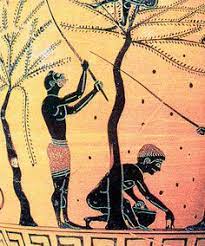
Ancient Hellenic Olive Harvest on Pottery Ariistoleo Awards Identifies the best High Phenolic EVOOs
Tracking the Journey: Clues from the Past
How do we know all this?
- Ancient Remains: Archaeologists find ancient olive pits, wood, and even those fossilized leaves. Over time, the pits found get larger, showing deliberate selection for bigger fruit.
- Tools of the Trade: The discovery of ancient olive presses and milling stones, some dating back to the Bronze Age or earlier, proves people were seriously processing olives for oil.
- Genetic Fingerprints: Modern DNA studies confirm the Eastern Mediterranean, as the origin. They trace the lineage of today’s olives back to their wild ancestors and show how different varieties are related, revealing the complex history written in their genes.
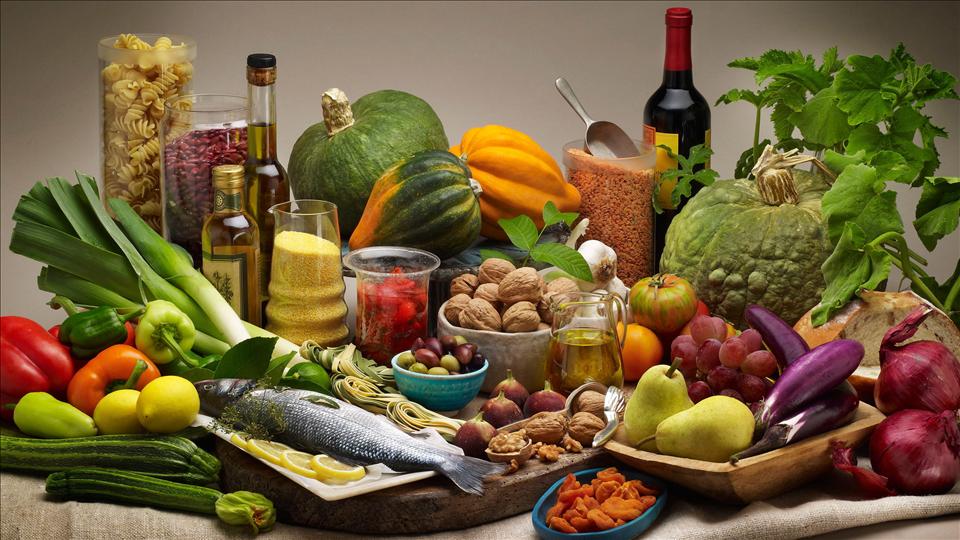
Eastern Mediterranean Diet used olive oil as the main healthy fat consumption
A Journey Through Time:
- Deep Past (Paleolithic): Humans likely used wild olives.
- Early Farming Era (Around 5th millennium BCE or earlier): Clearer signs of olive use and early cultivation emerge, especially around the Aegean.
- Bronze Age (5th-4th millennia BCE): Olive farming is well-established in the Eastern Mediterranean. Sophisticated oil production is underway, driven perhaps by that quest for medicinal quality. There Hellenes were already choosing the specific varieties and producing olive oil from unripened green olives, they preferred for their medicinal uses such as the Aegean Throuba and planting them across the Aegean and the rest of the known world.
- Spreading Out: From its Eastern Mediterranean heartland, the cultivated olive began its slow march west across the Mediterranean basin (to Italy, France, North Africa, Spain) and east, with stories suggesting Alexander the Great’s armies carried olives and grapevines as far as Afghanistan.
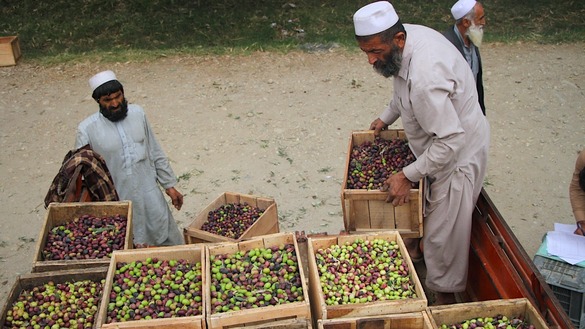
From the time of Alexander the Great Olive trees were introduced to Afghanistan
The Olive Transformed
This long journey, guided by human hands, transformed the small, bitter wild fruit into the diverse olive varieties we cherish today, featuring:
- Larger Fruit with more flesh and oil.
- Less Bitterness, making them tastier (though curing still helps!).
- Higher, More Reliable Oil Content.
- More Predictable and Abundant Harvests.
A Lasting Partnership
The story of olive domestication is a tale of human observation, patience, and ingenuity. Starting in the Eastern Mediterranean, driven by needs for food, oil, and perhaps even medicine, people gradually selected and shaped the wild olive. This enduring partnership created not just a vital food source, but a tree that became deeply woven into the culture, cuisine, and landscapes of the Mediterranean and beyond – a true gift from the ancient world.
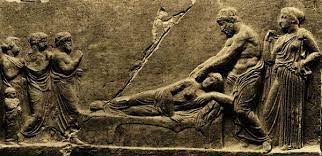
Medicine in ancient Athens. Massage with high phenolic EVOO
Arisrtoleo Awards High Phenolic EVOOs
Laconiko Estate EVOO, Greece / USA
Laconiko OLIO NUOVO, Greece / USA
Laconiko ZOI Ultra Premium, Greece / USA
EVOLIA Organic Farm Greece
FYLLIKON FIRST HARVEST ORGANIC Greece
TERRA CENTURIA Slovenia Organic
AGOURELAIO Early Harvest Organic Greece
PLUS HEALTH GREEN Organic Greece
“THETA” by THERIANOS FAMILY Organic – Greece

